Escalating Tensions: The US-Israel 'Preventive Strike' on Iran's Nuclear Program
In a dramatic turn of events that sent shockwaves across the Middle East and beyond, Israel and the United States launched a coordinated military operation against Iran on the morning of February 28th. This pre-emptive strike, primarily aimed at dismantling Iran's contentious nuclear and long-range missile programs, marks a significant escalation in the long-standing geopolitical rivalry. The joint effort underscores a shared concern over Tehran's regional influence and its nuclear ambitions, which both nations perceive as an existential threat.
The operation, dubbed "Roar of the Lion" by Israeli Prime Minister Benjamin Netanyahu and "Epic Fury" by the U.S. Department of Defense, saw a barrage of aerial strikes targeting key strategic locations across Iran. The scale and coordination of this US-Israel operation have immediately transformed the regional security landscape, drawing swift and severe retaliation from Tehran.
Unfolding the 'Preventive Strike': Objectives and Initial Impact
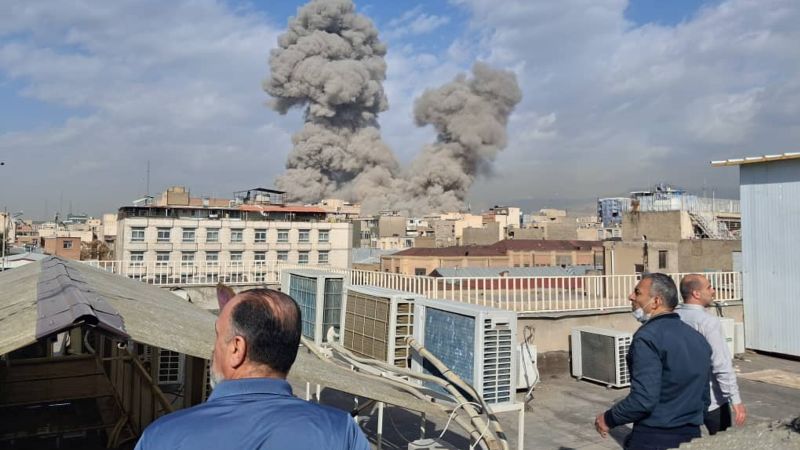
The dawn of February 28th witnessed a series of powerful explosions across major Iranian cities, including Tehran, Isfahan, Qom, Karaj, Kermanshah, Lorestan, and Tabriz. Israeli Defense Minister Israel Katz confirmed the "preventive strike," a term historically used to justify military action taken to neutralize an imminent threat. U.S. President Donald Trump later affirmed American participation, emphasizing the strikes were designed to counter Iran's development of long-range missiles and its nuclear program, which he argued posed a direct threat to Washington and its allies.
Reports from various media outlets indicated that among the primary targets were high-value individuals and critical infrastructure. Notably, there were unconfirmed claims regarding the elimination of Iran's Supreme Leader, Ayatollah Ali Khamenei, who has ruled the Islamic Republic for 37 years, and President Masoud Pezeshkian. While some Israeli sources and Reuters initially reported Khamenei's death following a strike on his residence, Iranian state media vehemently denied these claims, asserting that both leaders were alive and safe. The ambiguity surrounding these reports only fueled further speculation and uncertainty about the operation's precise outcomes.
Crucially, one of the main objectives of this combined US-Israel operation appeared to be Iran's nuclear facilities. Explosions were reported in Isfahan, a city known to host one of Iran's significant nuclear sites. The strategic targeting suggests a direct intent to cripple Iran's nuclear infrastructure and capabilities, an aim President Trump explicitly stated as crucial for regional and global security. He further called upon the Iranian army to lay down arms and its citizens to "take their destiny into their own hands," hinting at a broader strategy beyond military strikes.
Iran's Resolute Retaliation: A Regional Conflict Ignites
The reverberations of the US-Israel operation were felt almost immediately as Iran launched a decisive counter-attack. In response to the joint strikes, Iran unleashed dozens of missiles targeting Israeli territory. Air raid sirens blared across numerous Israeli cities, prompting authorities to declare a state of emergency and urge citizens to seek shelter in protected zones. The Israel Defense Forces (IDF) confirmed the incoming missile barrage, highlighting the rapid escalation of the conflict.
The retaliatory strikes were not confined to Israel alone. Iran's response extended to American military bases situated across the broader Middle East, signaling a wider regional conflict. Explosions were reported in Bahrain, the UAE, Qatar, Kuwait, Jordan, and Saudi Arabia – all nations hosting significant U.S. military presence. This expansion of targets demonstrates Iran's intent to challenge not only Israel but also the U.S. and its regional allies directly, turning the conflict into a multi-front engagement. Residents in Tel Aviv reported loud explosions after fresh Iranian missile attacks, with one ballistic missile hitting a building, resulting in the death of a 40-year-old woman and injuring over 20 people, as reported by The Times of Israel.
The intensity of Iran's response underscored the volatile nature of the region. Hundreds of flights were canceled across the affected countries, and all sides reported casualties, including civilians. The United Arab Emirates, among others, reserved the right to "respond to this escalation," indicating potential for further involvement and widening the conflict beyond the initial belligerents. For a deeper dive into how this conflict extends beyond Israel, consider reading Beyond Israel: Iran Strikes US Bases, Igniting Wider Mideast Conflict.
The Broader Geopolitical Landscape and Future Implications
The current US-Israel operation against Iran, focusing on its nuclear program, represents a significant gamble with profound geopolitical implications. The decision to undertake a "preventive strike" suggests that both Washington and Jerusalem believe diplomatic efforts and sanctions alone were insufficient to curb Iran's nuclear trajectory. This aggressive posture has immediately put regional stability at severe risk.
The involvement of the United States adds a global dimension to what might otherwise be viewed as a localized conflict. President Trump's statements about protecting Washington and its allies against Iran's long-range missiles highlight a strategic imperative for the U.S. in the region. However, the direct targeting of US bases by Iran places American personnel and assets in direct peril, raising questions about potential next steps and the rules of engagement.
The conflict has also placed pressure on Arab states in the region, many of whom have complex relationships with both Iran and the U.S. While some may tacitly support actions against Iran's nuclear program, the direct targeting of their territories due to the presence of U.S. bases forces them into a precarious position. The cancellation of flights and reports of civilian casualties indicate a rapidly deteriorating security environment for ordinary citizens across the Middle East. Prime Minister Netanyahu's announcement on March 1st that Israel would intensify its strikes on Iran in the coming days suggests a sustained, rather than singular, military campaign, promising further volatility. To understand the immediate aftermath and further escalation, refer to US-Israel Launch 'Epic Fury' on Iran: Mideast Conflict Escalates.
This unprecedented US-Israel operation is not just about nuclear facilities; it's a profound reordering of power dynamics in the Middle East, with potential long-term consequences for global energy markets, international alliances, and the future of non-proliferation efforts. The world watches anxiously as this new chapter of conflict unfolds, hoping for de-escalation while preparing for the unknown.